

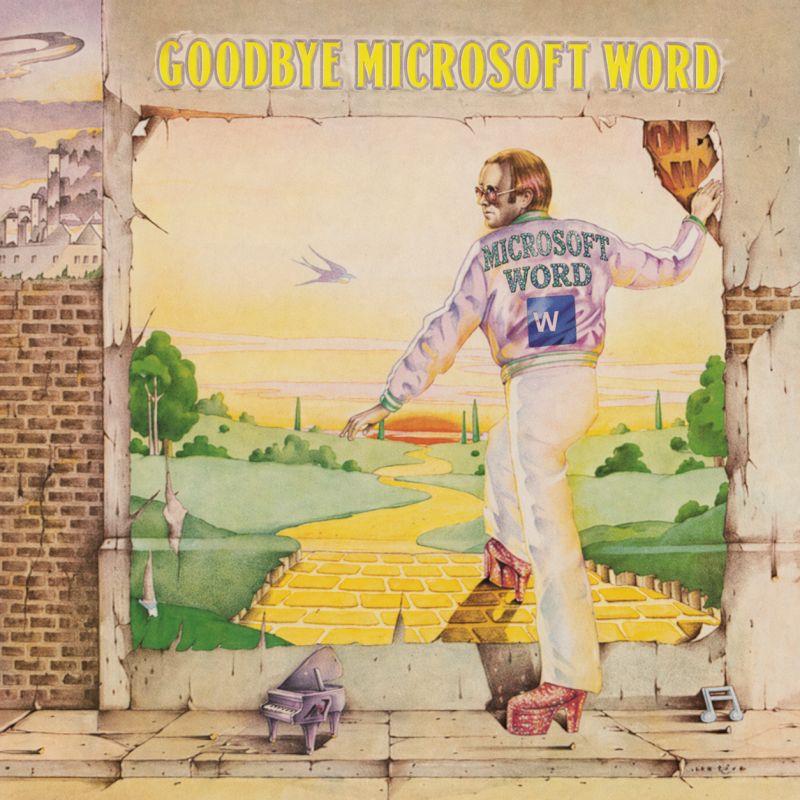
Goodbye Microsoft Word

Goodbye Microsoft Word 🎵
Today, I had my first experience of a managing partner excitedly declaring over email, "I SEE EXACTLY WHAT YOU MEAN ABOUT NOT HAVING TO WORK IN WORD".
For lawyers, Microsoft Word was truly a standalone application, a place where IP, productivity, and auditability all met. On the development side, Microsoft Word has always been an obstacle to overcome.
But the newest web-based software products finally bring those two visions together. Word uploads now render easily in the best web products. They can be edited with tracked changes. They can even be edited simultaneously, a feat no single keyboard user could ever accomplish without the help of programming. What's more, and truly acts as the nail in the coffin, is that end-users aren't the ones doing those edits anymore. AI agents, able to understand a wide range of content, search databases, and follow directions, can now make those edits for the user much faster than they could by themselves.
Word itself will live on, but not as the application that it once was for law. Web-based work and AI agents will turn Word into a data intermediary like JSON or yaml, a structured, portable way to convey meaning and allow human users to connect to content visually.For developers, Word is becoming a solved problem, a roadblock that has been cleared by the help of excellent open-source work as well as coding agents. Making an engine for web-based Word has been difficult and full of snags and presents edge cases yet to solve, but the fundamental needs are now ready to be addressed by a web application and a host of AI agents.
And once people can see and feel how convenient it becomes to work...
I think we'll all be singing, Goodbye Microsoft Word.
See the discussion on LinkedIn: https://www.linkedin.com/posts/drew-bloom-053809ab_goodbye-microsoft-word-today-i-had-share-7452736415576006656-iWGy?utm_source=share&utm_medium=member_desktop&rcm=ACoAABdvTP8BoqnZkBPS2TTX4Ar_Qn6ydsHavmk