
AI in Insurance — What Works, What Backfires, and Why Leadership Matters

If you run an insurance agency or sit in an operations or leadership role at a small-to-mid-size carrier, you're getting pitched on AI right now. A lot. The pitch is usually some version of: faster claims, lower overhead, better customer experience, more capacity per agent.
What the pitch usually leaves out is the thing that makes insurance work: it's a trust business. Clients buy a policy and then mostly forget about it — until something goes wrong. At that moment, the experience they have with your agency shapes whether they stay, leave, or tell people about it. Any AI strategy that doesn't start with that reality is going to create problems the vendor won't be around to clean up.
Here's an honest look at where AI delivers real value in insurance, where it creates risk, and what actually good AI adoption looks like in this industry.
Where AI Genuinely Helps
Claims intake and documentation routing. The moment a claim comes in is high-volume and high-friction — lots of forms, lots of routing decisions, lots of data entry. AI can handle the triage work: extracting information from intake documents, routing claims to the right adjuster or team, flagging incomplete submissions, and generating the paper trail that everyone needs downstream. This is paperwork and logistics, and AI does it well. It's not making claims decisions — it's making sure the right information gets to the right place quickly and without manual transcription errors.
Internal knowledge management. Insurance products are complex, and keeping agents current on policy details, coverage comparisons, and underwriting guidelines is a constant operational challenge. AI-powered search across your internal documents — policy manuals, coverage summaries, training materials, past correspondence — is one of the more underrated applications in this space. It doesn't require putting anything client-facing in front of an AI. It just makes it faster for an agent to find accurate information when they need it. For agencies in the Cedar Rapids area bringing on new producers or cross-training staff, this kind of internal knowledge tooling is genuinely useful without carrying significant risk.
Renewal workflows and preparation. Renewals are predictable, high-volume work: pulling together client history, flagging coverage gaps, preparing documentation for the agent conversation. This is exactly the kind of structured, repeatable work that AI handles well. Automating the prep doesn't replace the renewal conversation — it makes the agent better prepared to have it. That's a good use of the technology.
Back-office data work. Quote preparation, data entry, client record updates, audit documentation — these are low-judgment, high-effort administrative tasks. They're also the tasks most likely to have errors introduced through manual handling. Automating here reduces error rates and frees up staff time for work that actually requires human judgment. This is where most agencies should start.
Where Insurance Companies Get Burned
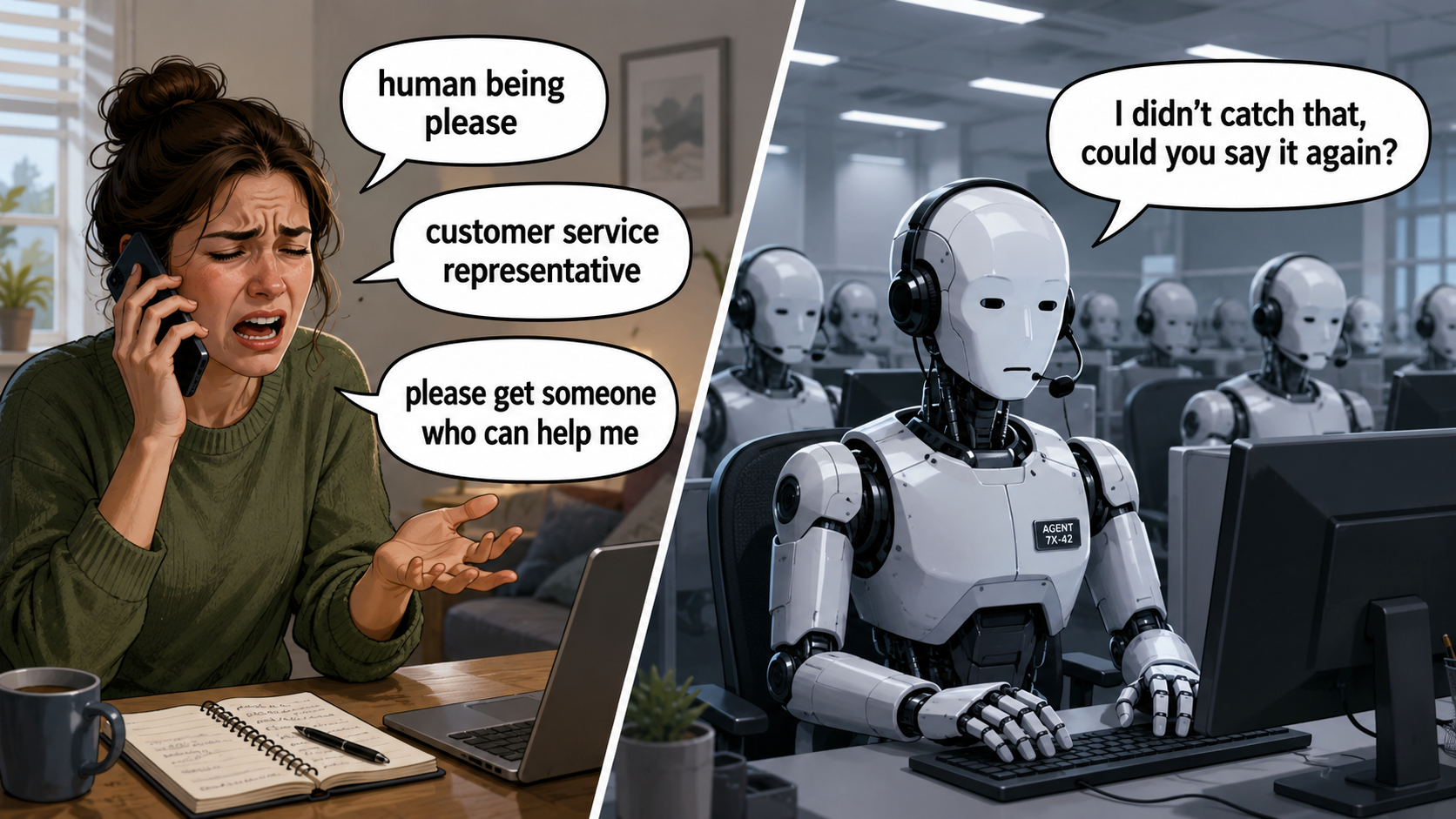
Automating client communications during claims. A client who just had a car accident or a flood doesn't want to interact with a bot. They're stressed, they have questions, and they need to feel like someone is actually handling their situation. Replacing that touchpoint with an automated system — even a good one — signals that they're a transaction, not a relationship. I've seen this pattern in other professional services industries, and it almost always costs more in client trust than it saves in agent time. The claims moment is precisely where the human relationship is most valuable. That's not the place to optimize for speed.
Using AI for coverage recommendations without human review. Some vendors are pitching AI that helps clients understand their coverage, compare options, or identify gaps. In theory, useful. In practice, coverage recommendations carry real compliance and liability exposure in insurance — regulatory requirements vary by state, errors-and-omissions implications are serious, and an AI model producing a confident-sounding but inaccurate recommendation is a problem that lands on your agency, not the vendor. Any AI output that touches coverage advice needs meaningful human review. Not a checkbox. Not an override option buried in a workflow. An actual review.
Replacing relationship touchpoints with bots because the math looks good. The operational math on replacing agent calls or check-ins with automated outreach usually pencils out. Labor cost avoided, response time improved, coverage increased. What doesn't show up in that calculation is what happens to client retention when people realize they're being managed by a system rather than a person. In a business built on long-term relationships — exactly the kind that Iowa independent agencies and regional insurers depend on — this is a slow leak you may not notice until the damage is done.
The Compliance and Accuracy Constraint
Unlike some industries where an AI error is inconvenient, insurance has real legal and regulatory exposure when AI produces inaccurate output. Policy terms, coverage interpretations, claims handling requirements, disclosure obligations — these aren't areas where "good enough most of the time" is acceptable. State insurance regulators have specific requirements about how claims are handled and communicated, and those requirements don't bend for technology.
This means that any AI deployment in an insurance context needs human review workflows built in — not bolted on, not available if someone thinks to check. The output of any AI that touches policy information, claims documentation, or client-facing content should route through a human before it matters. Vendors don't always emphasize this. Most AI tools are designed for speed, not for environments where an accuracy error has regulatory consequences.
This isn't an argument against AI in insurance. It's an argument for deploying it in the right places with the right guardrails — and being honest about what those guardrails require operationally.
What Good AI Leadership Looks Like in Insurance
The agencies and firms that get real value from AI in this space tend to share a few things.
They start with back-office targets — the high-volume, low-judgment work where errors are currently introduced by hand and time is currently wasted on logistics. They build confidence and operational discipline there before extending AI into anything that touches client relationships.
They keep client-facing roles human, especially during claims and renewals. They use AI to make agents better prepared, not to replace the agent conversation.
They build human review into any automated output before it affects compliance or client advice. Not as an afterthought — as a designed step in the workflow.
And they track outcomes that actually matter: claims processing accuracy, renewal retention rates, compliance audit results — not just how many documents got generated or how many hours of data entry were avoided.
That kind of strategy requires someone who understands both the technology and the operational realities of insurance. Most AI vendors know their product. They don't know your state's DOI requirements, and they're not going to tell you when their tool is the wrong fit for your agency.
Mosaic works with insurance agencies and financial services firms across the Cedar Rapids–Iowa City Corridor on exactly this kind of AI strategy work. If you're sorting through vendor pitches or trying to figure out where AI actually fits in your operation, get in touch — or learn more about how we work through our Fractional AI Leadership engagement.
Mosaic Solutions is an AI strategy and automation consultancy based in the Cedar Rapids/Iowa City Corridor. We work with SMBs in regulated industries that want honest advice, not another tool to buy.